HHC briefing for CPT periodic visit to Hungary in 2013
HHC met members of the CPT delegation to Hungary in April 2013.
Analyses and summaries in English on the problems arising in connection with the Fourth Amendment to the Fundamental Law of Hungary in terms of the rule of law and the protection of human rights.
The HHC, the HCLU and the Eötvös Károly Institute met the delegation of the Venice Commission in Budapest last week, and informed them about the severe problems arising in connection with the Fourth Amendment to the Fundamental Law of Hungary.
Tourpikay Quadery fled Afghanistan as a young widow with four small children. She arrived here 20 years ago, she became a Hungarian citizen 12 years ago. Today she works as a school secretary in Csepel and also as an official interpreter. Her moving life story is a real Women’s Day gift for all of us.
Three Hungarian NGOs, the Hungarian Helsinki Committee, the Eötvös Károly Institute and the Hungarian Civil Liberties Union addressed the Secretary General of the Council of Europe and the European Commission Vice-President, Commissioner in Charge of Justice, Human Rights and Citizenship in order to raise their attention to the planned Fourth Amendment to the Fundamental Law of Hungary, threatening the rule of law. The NGOs asked the Secretary General of the Council of Europe to request the Venice Commission to perform an analysis of the proposed amendments.
Budapest, 5 March 2013: Five companies have said they will no longer place advertising in a Hungarian newspaper that published extreme anti-Roma statements.
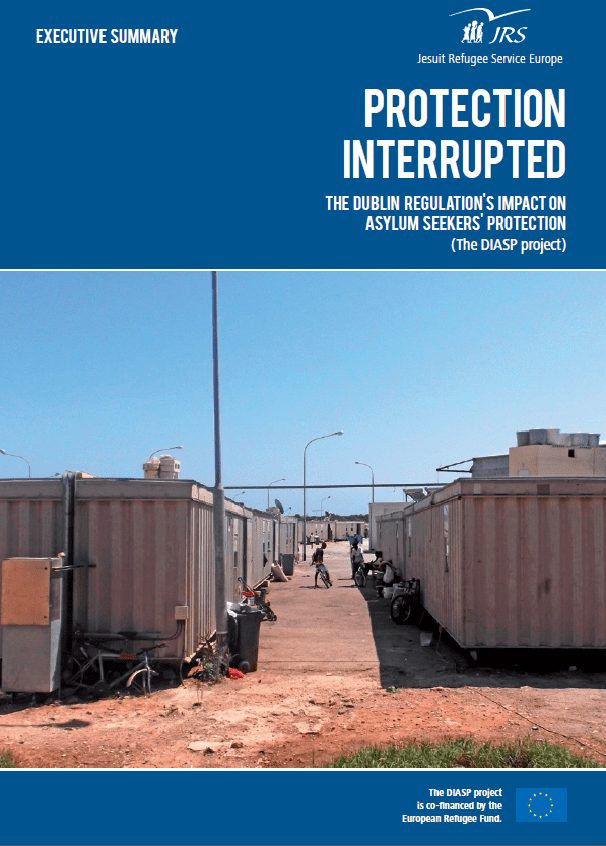
New research shows that the system continues to violate the rights of refugees.
Interview with HHC attorney Gábor Győző, who pleaded the El Kott case at the CJEU, in the ECRE weekly newsletter.
In mid-December 2012, the Luxembourg-based European Court of Justice (ECJ) delivered a judgment in a seemingly unique Hungarian case. However, its judgment could settle the legal status of tens of thousands of Palestinian refugees in a satisfactory manner.
The Hungarian Helsinki Committee is joining with a coalition of NGOs in asking domestic companies and Hungarian divisions of multinationals to take a stand against racist commentary in Hungary. The NGOs are asking, among others, Vodafone, T-Com, FedEx, IKEA and Procter and Gamble to reconsider advertising in a Hungarian newspaper which published an article talking about Romani people in unacceptably racist and prejudiced language.
C-364/11
The Supreme Court of Hungary (Kúria) issued an official opinion on 10 December 2012 in order to promote a
harmonised practice at Hungarian courts regarding the application of the safe third country concept in asylum
cases.
Appl. no. 13457/11
In 2010, the Hungarian Parliament adopted an Act allowing the dismissal of certain civil servants without justification. Related provisions left civil servants without effective domestic remedy, because in absence of justification, it is almost impossible … Read more
Protest of the refugees from Bicske.
During the riots in the autumn of 2006, X. Y. was ill-treated by police officers while being escorted to a police van after his apprehension. The case was witnessed by fellow police officers, who were … Read more
The project is about to create a multilingual online database of case summaries interpreting refugee and asylum law of 17 EU Member States.
The HHC, the HCLU and the EKINT claim that the preliminary and obligatory registration for voting has no legitimate aim and thus it is arbitrary,
Appl. no. 13058/11
Last year the Government introduced fundamental changes to the judicial system. Although 30 separate provisions of the relevant regulation were amended in response to the serious concerns raised by the Venice Commission (VC), the organization of the judicial system remains centralized and still endangers the independence of the judiciary and the fairness of court proceedings – according to the Eötvös Károly Institute, the HHC and the HCLU.