Pride Freedom prevails
Prosecution drops charges against organisers of Budapest and Pécs Pride marches


More than ten years have passed since a final judgment in the Baka v. Hungary case was delivered on 23 June 2016. Over the years, the case has become a par excellence negative example of … Read more

The Hungarian Helsinki Committee (HHC) has submitted input to the UN Special Rapporteur on Torture for his thematic report on practical measures to reduce and prevent prison overcrowding. The submission examines the main drivers of … Read more
This autumn, the procedure under Article 7 of the Treaty on European Union concerning Hungary, which has been ongoing since 2018, will be on the agenda of the General Affairs Council once again. At the … Read more
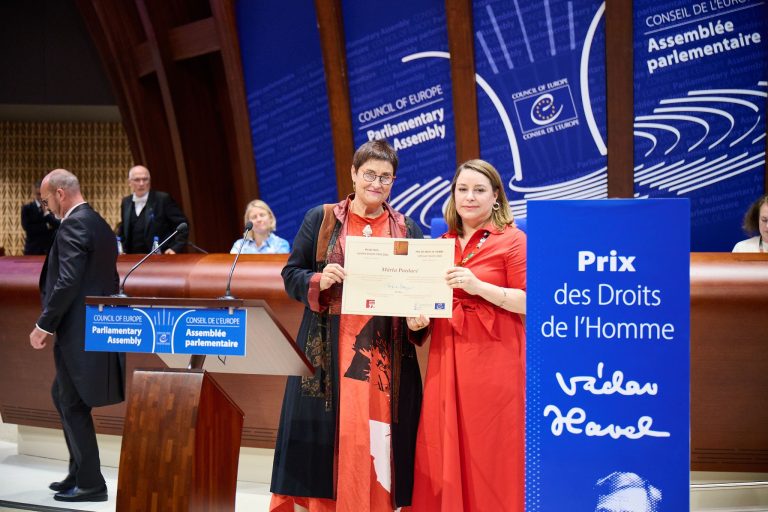
Iranian human rights lawyer Nasrin Sotoudeh has won this year’s Václav Havel Human Rights Prize. The award was presented today at the PACE (Parliamentary Assembly of the Council of Europe) autumn plenary session’s opening. Iranian journalist Masih Alinejad and Márta Pardavi, Co-chair of the Hungarian Helsinki Committee, were also shortlisted for one of Europe’s most prestigious human rights awards.

The Caring to Include trauma-informed care toolkit helps refugee-support organisations apply informed-trauma principles in everyday services and across their organisations. The toolkit combines practical guidance for staff and volunteers with tools for organisations to assess their current practice and identify priorities for improvement.

Do you want to:
– get to know how democratic power functions at the local level and become an active member of your community?
– be a part of a diverse, young team of refugees, migrants and Hungarians?
– explore human rights issues faced by refugees in Budapest?
– learn about interactive drama methods and create an interactive theatre play together?
If yes, apply to the Hungarian Helsinki Committee’s Human Rights Learning Lab by 6 September!

If you are a non-EU family member of a Hungarian or another EEA national and live in Hungary with a permanent residence card issued between 3 August 2016 and 2 August 2021, an important deadline is approaching. Your card will automatically become invalid on 3 August 2026, so you must apply to the National Directorate-General for Aliens Policing for a new residence document by 27 July at the latest.
The “Human Rights Defenders of the Future” course brings Hungarian and refugee youth together to explore active citizenship

The Hungarian Helsinki Committee has submitted its opinion on the draft 17th Amendment to the Fundamental Law. The organisation objects to the government allowing just 5 days for public consultation on matters of this magnitude, and to its failure to justify in sufficient detail the considerations underlying the proposed amendments. The Helsinki Committee considers the removal of certain constitutional office-holders to be acceptable for the purpose of restoring the rule of law, but takes issue on several points with the manner and justification of those removals. It also identifies as problematic the fact that the draft contains changes that are not necessary for restoring the rule of law, while at the same time failing to repeal certain provisions that seriously curtail fundamental rights.
In his victory speech following the April parliamentary elections, the future prime minister called on the high public office holders appointed and entrenched over the past sixteen years to resign. As those concerned have not yet resigned, the new government is expected to replace them through legislative measures, within the framework of the rule of law, as promised by the prime minister. How can this be achieved? In our background paper, we have compiled the international standards that are applicable in similar situations and that the Hungarian government must also adhere to.

The Article 7 procedure concerning Hungary, which has been ongoing since 2018, focuses on serious breaches of the EU’s fundamental values, covering several rule of law and human rights issues not addressed by other EU procedures. The new government of Hungary has made several welcome commitments to address the systemic problems that have developed over the past decade and a half in the areas covered by the procedure, but addressing these properly is a longer-term process.

The prosecution has dropped all charges against the organisers of Budapest and Pécs Pride marches, ending a legal battle that began after the government’s 2025 crackdown on LGBTQI-related public demonstrations. The decision marks a significant setback for attempts to restrict Pride events and confirms that the exercise of fundamental rights cannot be criminalised, while underscoring the need for broader legal reforms to bring Hungarian law back into line with European human rights standards.

The Hungarian Helsinki Committee has updated its Cemented website to document how long Fidesz-appointed officeholders can remain in their posts.
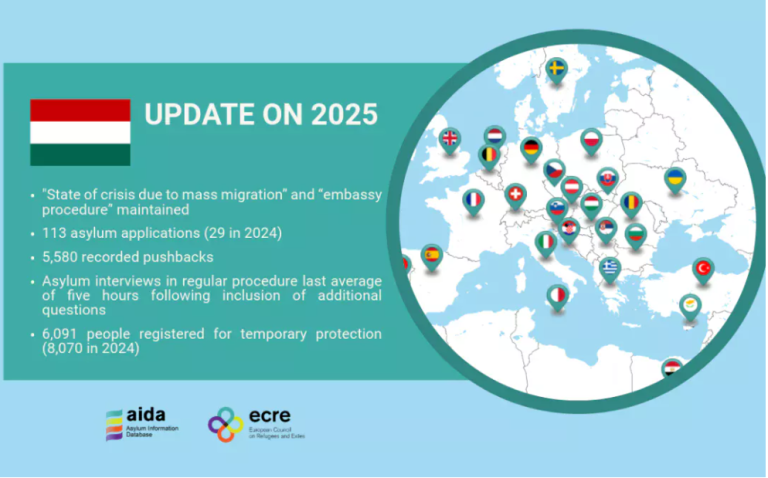
The AIDA report presents a comprehensive overview of the asylum system in Hungary in 2025.

The 2026 Citizen Election Report is a joint initiative of leading Hungarian civil society organisations active in election monitoring: 20k – Free Vote, the Hungarian Civil Liberties Union, the Hungarian Helsinki Committee, K-Monitor, Mérték Media Monitor, and Political Capital. It aims to provide an authentic Hungarian perspective on the 2026 parliamentary elections, drawing on analyses by experts with decades of experience, as well as firsthand accounts of hundreds of ballot counters, election observers, and voters.
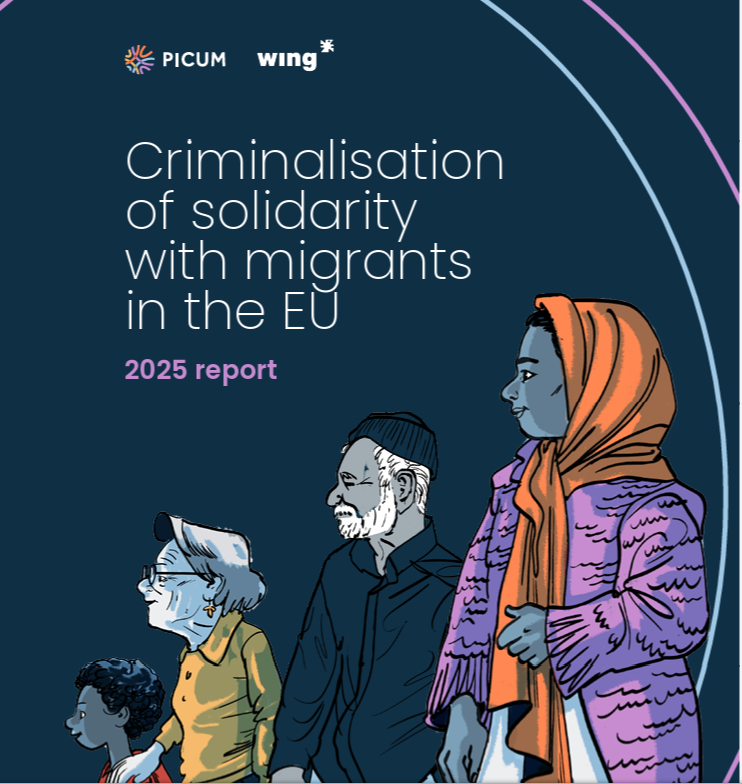
PICUM’s report on the criminalization of solidarity in the EU in 2025.
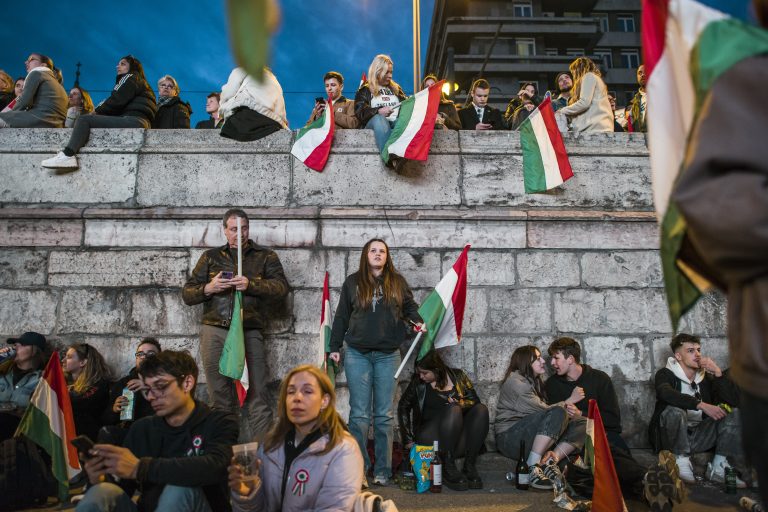
Hungary has voted for change. Now comes the hard work of restoring the rule of law. We, the Hungarian Helsinki Committee, look forward to playing our part.
Ahead of the April 12 elections, our latest briefing note is for everyone monitoring or closely following the Hungarian elections. We focus on selected aspects of the electoral environment that could be particularly relevant on … Read more
Background materials for election observation missions and delegations

The 2026 Hungarian parliamentary elections are taking place in a highly polarised political environment, marked by entrenched systemic distortions in electoral competition. Recent developments confirm that the primary risks to electoral integrity stem not from … Read more