Iranian human rights lawyer wins 2026 Václav Havel Human Rights Prize – HHC co-chair Márta Pardavi among the finalists
Iranian human rights lawyer Nasrin Sotoudeh has won this year’s Václav Havel Human Rights Prize. The award was presented today at the PACE (Parliamentary Assembly of the Council of Europe) autumn plenary session’s opening. Iranian journalist Masih Alinejad and Márta Pardavi, Co-chair of the Hungarian Helsinki Committee, were also shortlisted for one of Europe’s most prestigious human rights awards.
Translation is available for this content
Váltás magyarraThe Václav Havel Human Rights Prize has been awarded by the Parliamentary Assembly of the Council of Europe (PACE) since 2013. The three shortlisted candidates and the eventual laureate are selected not by parliamentarians, but by an independent selection panel. The Czech Charta 77 Foundation and PACE each appoint three independent experts to the panel, which is chaired by the President of PACE.
Today’s award ceremony was broadcast live on the Council of Europe’s website and on the organisation’s YouTube channel.
This year’s selection was exceptional in that, for the first time in the history of the prize, all three nominees were women. Two of them have been fighting Iran’s theocratic dictatorship: journalist Masih Alinejad, who is currently living in exile, and human rights lawyer Nasrin Sotoudeh, who was released from prison only a few months ago and remains in Iran. The third nominee was Márta Pardavi, Hungarian human rights lawyer and co-chair of the Hungarian Helsinki Committee.
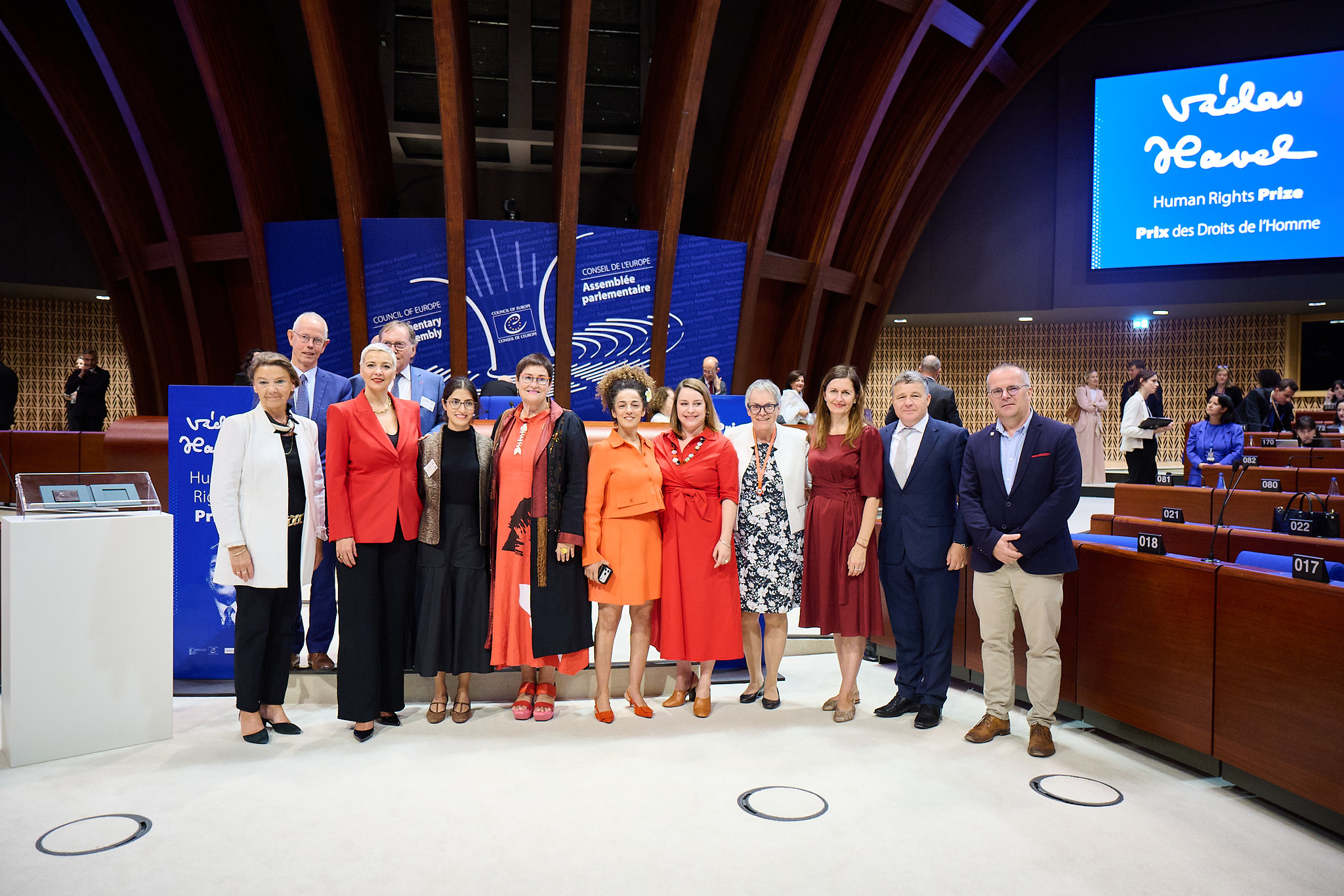
The award ceremony opened with a speech by Belarusian opposition politician Maria Kalesnikava, who spent years in prison and is herself a former laureate. Petra Bayr, President of the Parliamentary Assembly, then announced this year’s winner and presented the award to Nasrin Sotoudeh’s daughter.
Nasrin Sotoudeh is one of Iran’s best-known human rights lawyers. For as long as she was able to practise, she represented civil society activists, journalists, members of minority groups and children sentenced to death. She campaigned against laws requiring women to wear the hijab and against the death penalty, activities for which she was repeatedly arrested and imprisoned for long periods. She was arrested again in April this year and released on bail in May, but she remains at risk in her home country. Despite state repression and the personal dangers she faces, her unwavering commitment to justice has not diminished. She has become a symbol of courage and perseverance for human rights defenders and pro-democracy movements in Iran and beyond.
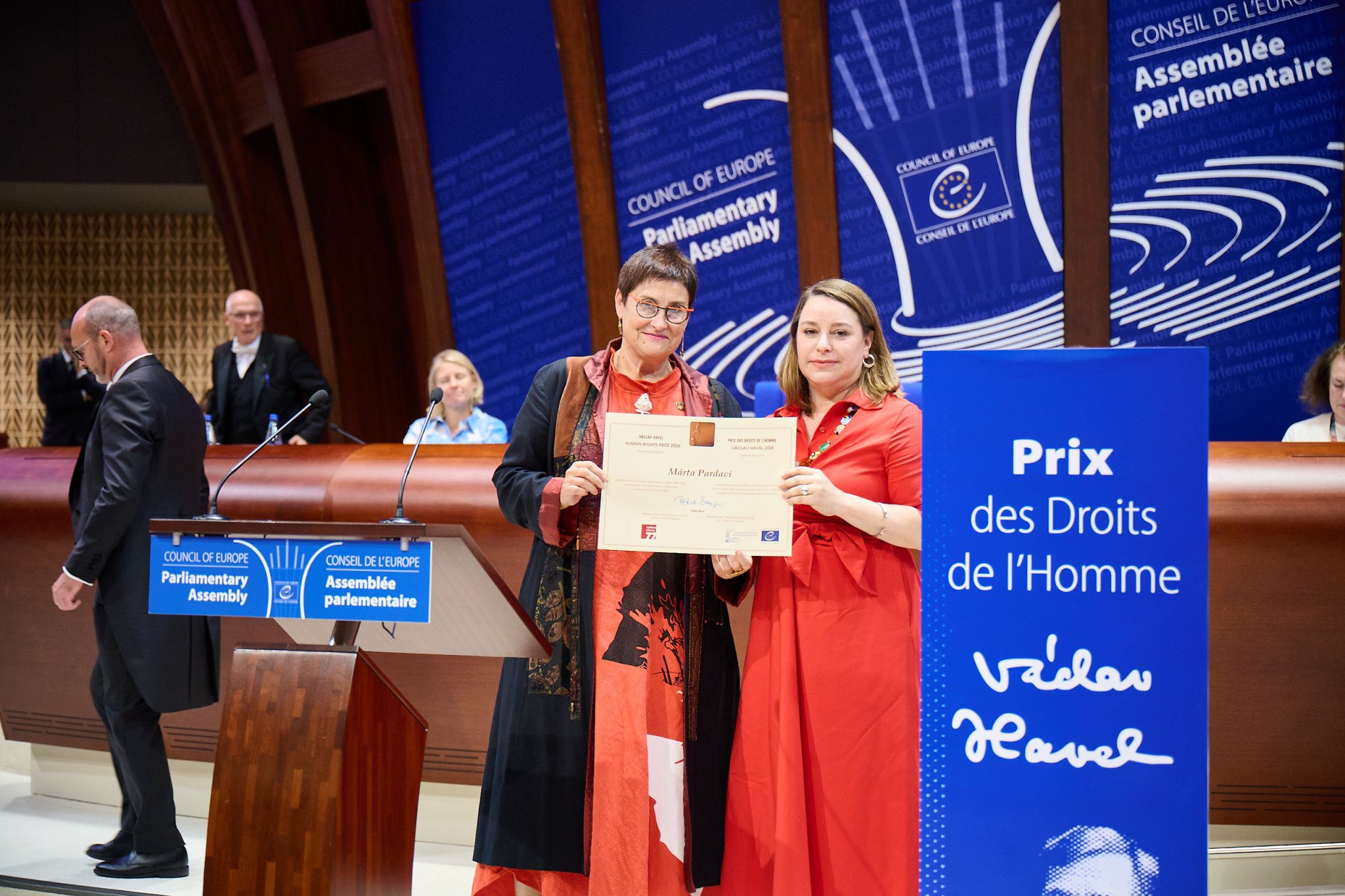
Receiving an award from the Council of Europe Parliamentary Assembly President, Márta Pardavi also congratulated this year’s Václav Havel Prize laureate. She recalled that, during his years in prison, Václav Havel could not have known whether his struggle for democracy and fundamental freedoms would ultimately succeed. Yet he drew great hope from his conviction that his actions had meaning and served a just cause. It is the same hope that human rights defenders in Iran, Hungary and elsewhere continue to feel today.
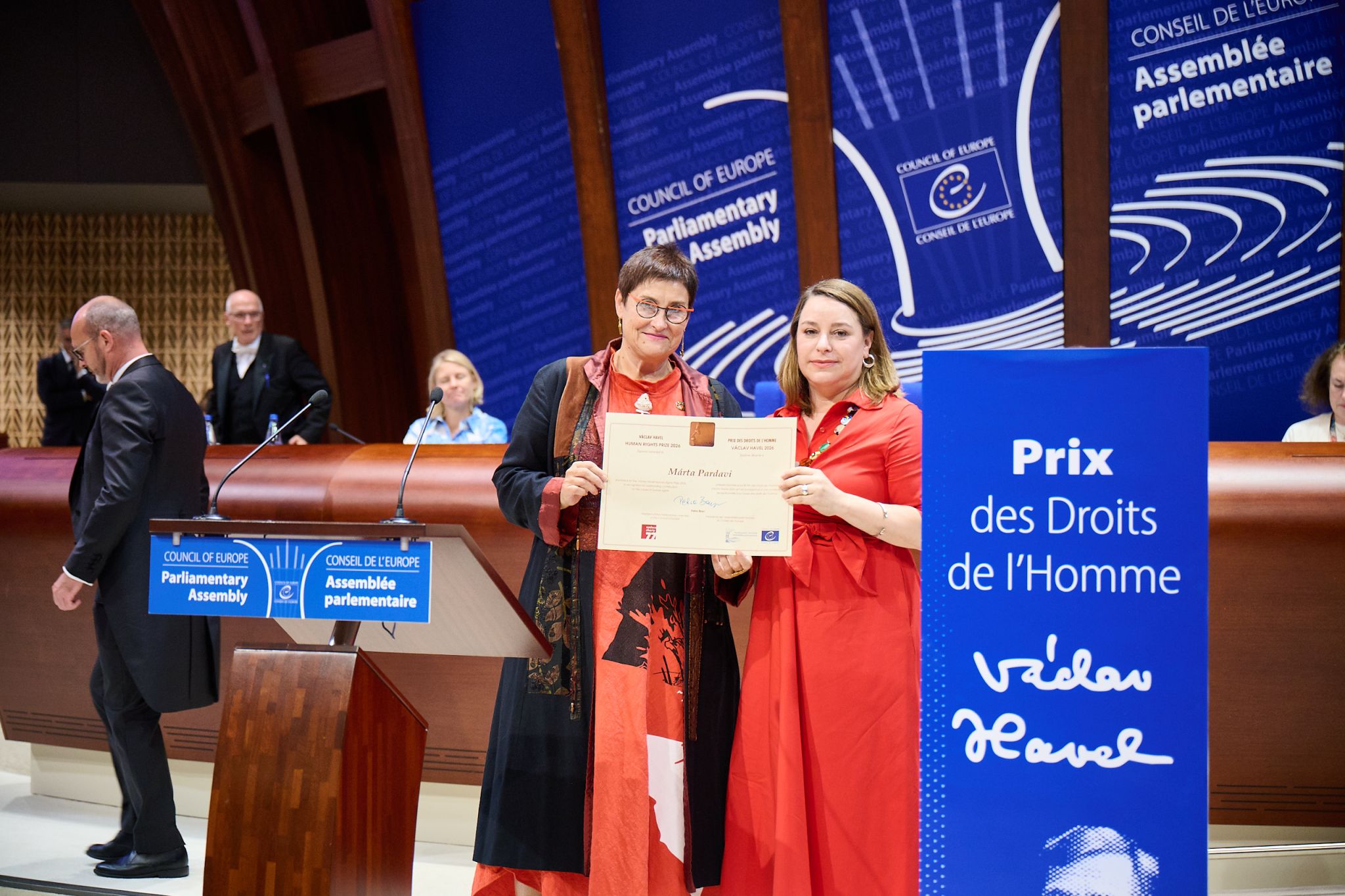
Notably, during the prize’s 13-year history, the Hungarian Helsinki Committee has now been closely connected to a nominee on three occasions. In 2017, the Hungarian human rights organisation was nominated in its own right, and five years later it was nominated again as a member of Szivárvány Koalíció (a coalition of Hungarian civil society organisations that helped ensure the failure in 2022 of the Orbán government’s referendum targeting transgender and gay people). This year, Márta Pardavi was nominated primarily for her work at the Hungarian Helsinki Committee.
Following the award ceremony in Strasbourg, a conference will be held in Prague on Wednesday to mark the 90th anniversary of President Václav Havel’s birth, with the participation of the finalists and other prominent guests.
Márta’s portrait can be downloaded here. Additional press information is available on the Václav Havel Human Rights Prize website.
The world is changing. Our devotion to human rights remains the same.
Please donate to the Hungarian Helsinki Committee, so that we can continue to stand up for human dignity and offer professional legal help to those who need it most.