Refugee children win in Strasbourg over unlawful detention
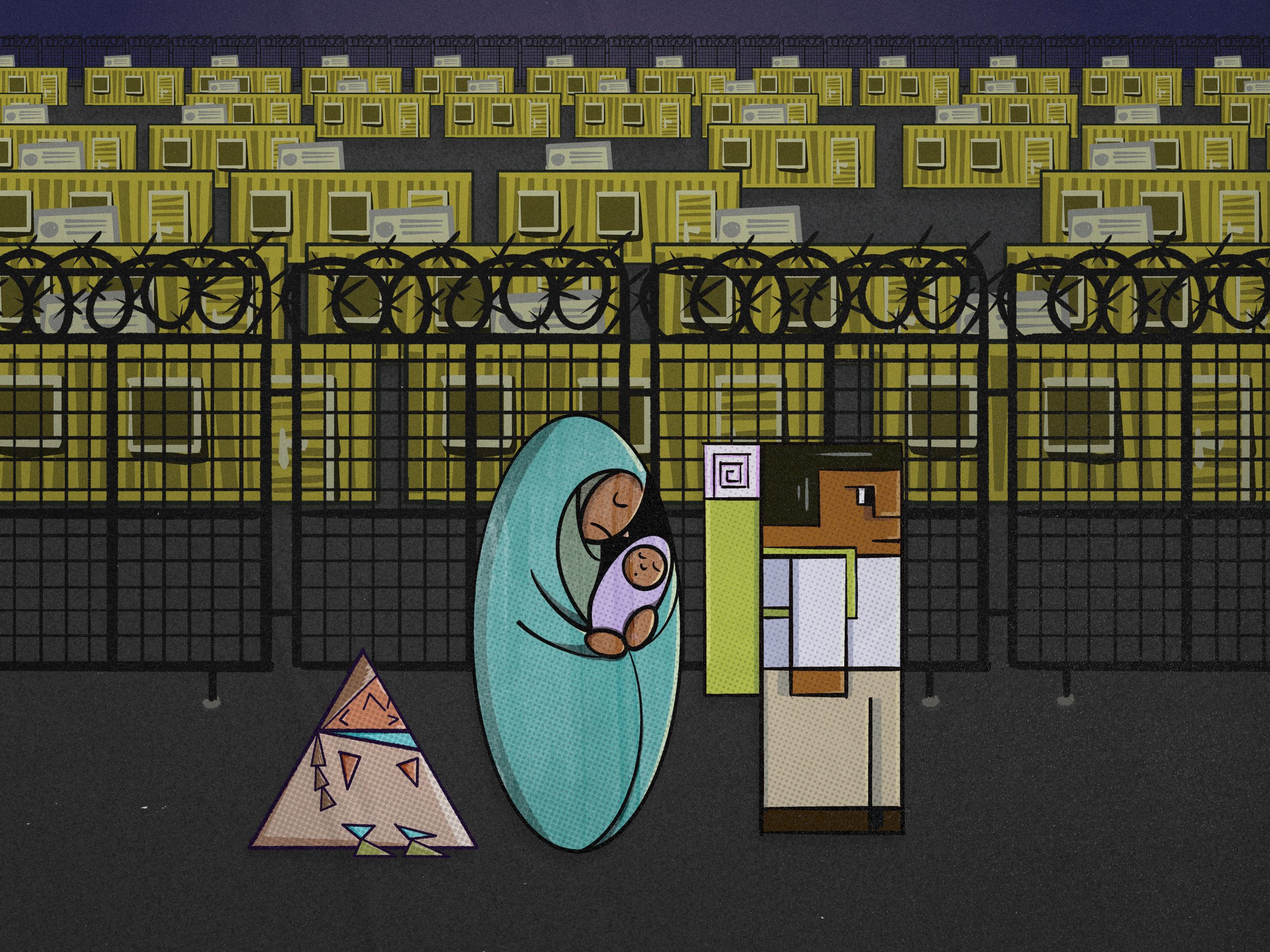
June 20 is World Refugee Day. Meanwhile, in Hungary, the word “refugee” has become a slur, and xenophobia underpins government policy. The Hungarian Helsinki Committee, a human rights organization devoted to defending persecuted people, firmly rejects this approach. Its refugee clients have just won two more cases at the European Court of Human Rights. In both cases, children – even with serious health conditions – were victims of rights violations by Hungarian authorities.
Translation is available for this content
Váltás magyarraThe European Convention on Human Rights clearly states that no one shall be subjected to torture or to inhuman or degrading treatment or punishment, nor to unlawful and arbitrary detention. The violation is particularly grave when the victims are vulnerable refugees or asylum seekers, and even more so when children are held without justification or under inhuman, degrading conditions. For years, this is exactly what the Hungarian state did to thousands of asylum-seeking children in the transit zones of Tompa and Röszke.
The Hungarian Helsinki Committee (HHC) opposed this institutionalized mass detention from the beginning. Its persistent legal work contributed to the government’s decision in May 2020 to close the transit zones. However, the Strasbourg cases related to the transit zones are still ongoing. Until yesterday, 22 such complaints brought by the HHC’s clients had ended in victory. On Thursday, the 23rd and 24th successful judgments were delivered by the European Court of Human Rights ECtHR.
The Iraqi Family
The ordeal of a six-member Iraqi asylum-seeking family with Hungarian authorities began in 2018. The parents, H. A. and R. A., fled their home in 2016. Their two-year journey was marked by hardship. In Serbia, the pregnant woman lost her baby and nearly died from uncontrolled bleeding. On top of this, their 10-year-old daughter is wheelchair-bound due to spinal muscular atrophy (SMA), completely unable to move her limbs, and requiring constant care – feeding, bathing, and hygiene – from her parents.
They entered the Tompa transit zone with official permission and believed they had finally found safety. But they were sorely disappointed. For six months, they endured clearly horrific conditions for a family in their situation. The Hungarian Helsinki Committee immediately contacted the ECtHR, requesting urgent intervention. The court ordered the Hungarian government to provide the family with adequate services or transfer them to a more open facility.
However, the government did not move them. Instead, it merely installed a ramp in front of their container. This still left the parents having to carry their daughter when bathing her, as it was impossible to push her wheelchair across the gravel-covered yard.
Now, seven years later, the ECtHR has ruled that the Hungarian state violated the prohibition of torture and inhuman or degrading treatment by detaining the Iraqi children unnecessarily and without regard to their vulnerability. The parents’ detention was also deemed unlawful. The family was awarded €17,500 in just satisfaction.
“In the meantime, the family’s life has improved. They settled in another EU country where the children receive the treatment and development support they need. But they have never forgotten the containers and endless gravel of the transit zone, so this court victory brings long-awaited justice,” said Ivóna Bieber, the family’s attorney from the Hungarian Helsinki Committee.
The Afghan Siblings
The two boys fled Afghanistan after losing their parents in a bombing. With permission from the Hungarian authorities, they entered the Röszke transit zone on October 24, 2017. Both were under 18; the younger was just 7 years old when they arrived in Hungary.
Although the authorities let them in, the traumatized boys without an accompanying adult struggled to cope. For four months, the authorities refused to even begin examining their asylum application and instead tried to return them to Bulgaria. In fear, the boys went on a hunger strike for three days. Finally, a specialist doctor saw them and diagnosed them as being in a serious psychological crisis, requiring medication.
On February 7, 2018, the Szeged court ruled that Hungarian authorities must assess their asylum request. In April 2018, after six months of detention, the boys were finally released from the inhuman conditions of the transit zone – only because a decision was made in their asylum case, and they were granted subsidiary protection.
The European Court of Human Rights found that the Hungarian state had violated the prohibition of unlawful detention, torture, and inhuman or degrading treatment by detaining the Afghan children unnecessarily and without regard to their vulnerability. The brothers were awarded a total of €7,000 in just satisfaction.
“This is another judgment in a case involving asylum-seeking children. In each of these cases, we hoped the rulings would become a legal benchmark for the treatment of children in detention – one that Hungary would have to follow. Time will tell whether more such judgments are needed, or if lawmakers will finally comply with child protection and asylum standards,” commented Barbara Pohárnok, the boys’ attorney from the Hungarian Helsinki Committee.
“No one wants to be a refugee. People are forced to flee. Our clients leave their homes and loved ones due to oppression, persecution, and war. On World Refugee Day, we honor them – refugees who show strength and perseverance every day. I feel lucky to meet so many exceptional people in my work. Their humanity and resilience deeply move me. But for them to rebuild their lives with dignity in a new place, they need help from all of us,” said Anikó Bakonyi, head of the refugee program at the Hungarian Helsinki Committee.